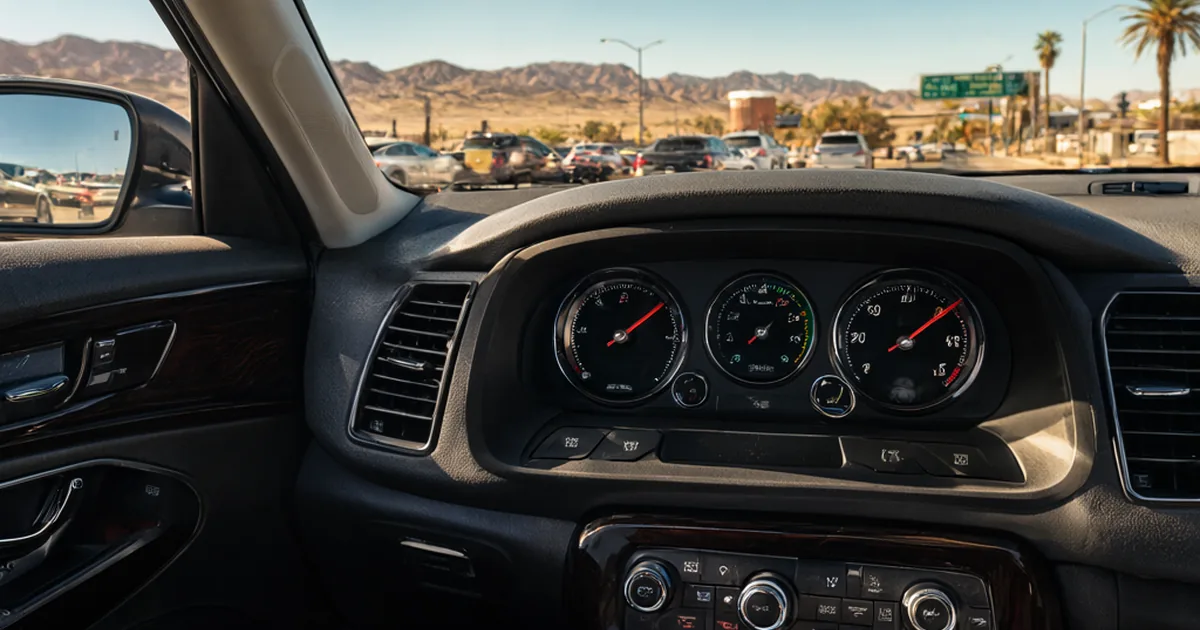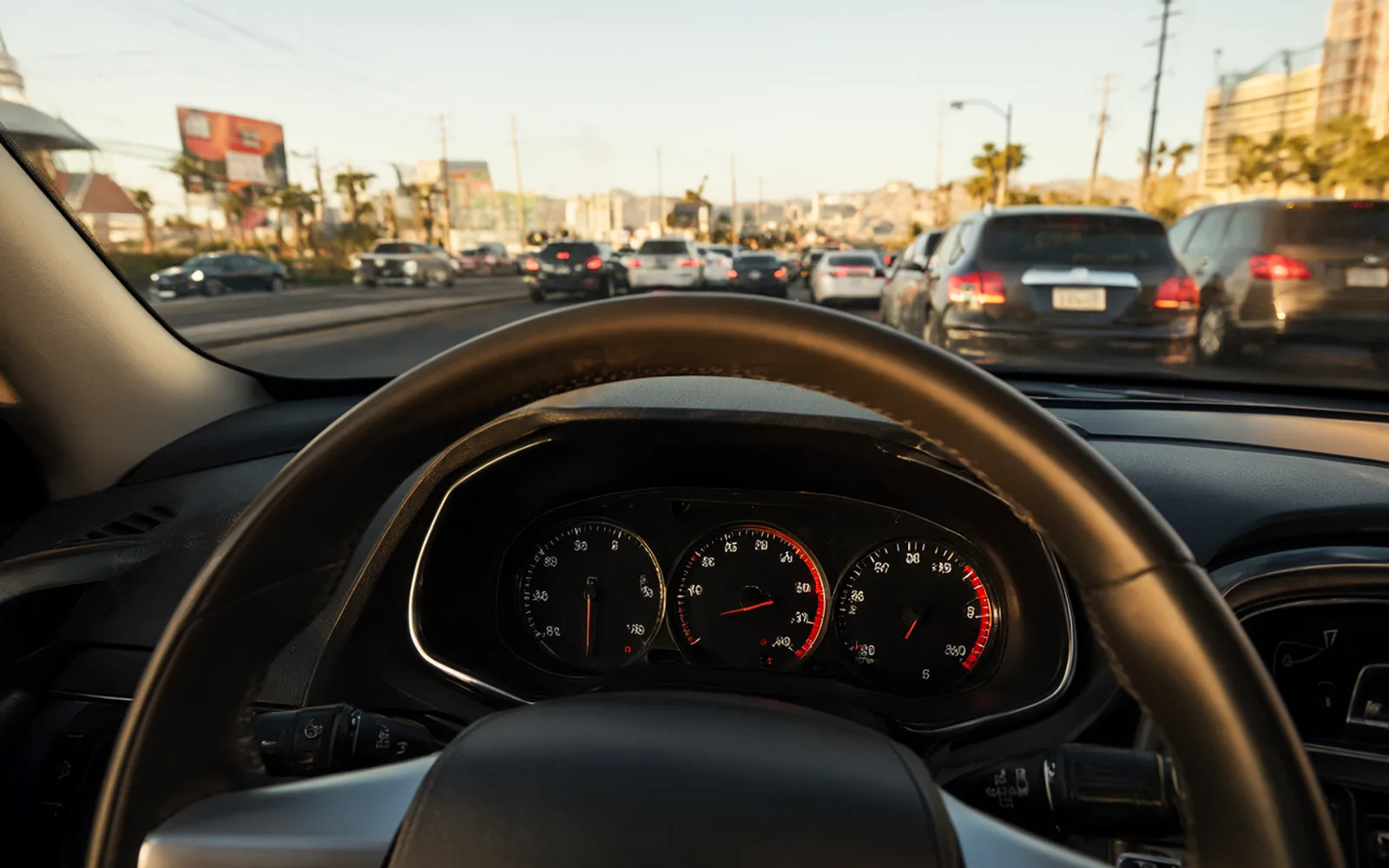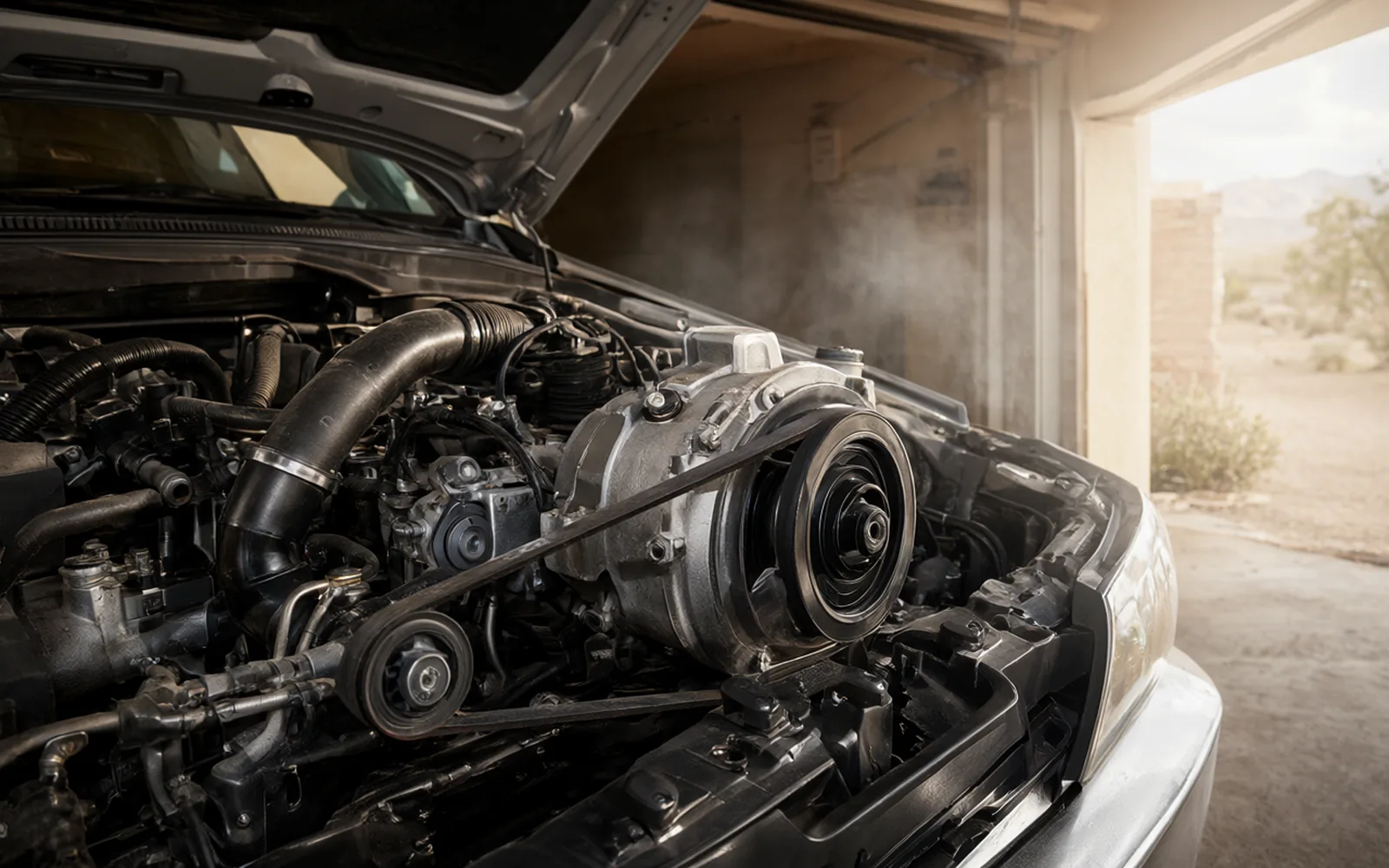
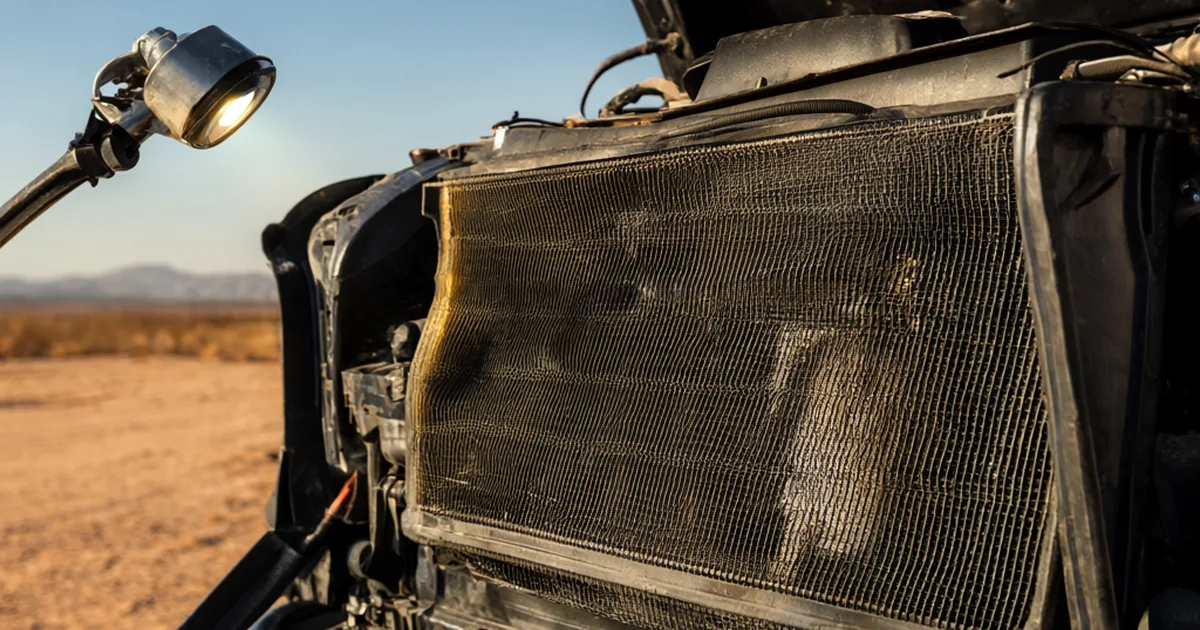
It’s a Tuesday in late July, the thermometer on the 215 Beltway is touching 114°F, and the temperature gauge on your BMW 5 Series is creeping into the red — again. You made it home from work in Summerlin, but just barely. That slow climb toward the danger zone isn’t “just the heat.” It’s almost always a cooling system component giving up, and in Las Vegas, the radiator is one of the first dominoes to fall.
Here’s what we see at our Arville Street shop all summer, and what it actually costs to fix.
Why Las Vegas Destroys Radiators Faster
Radiators in most climates get a break — cool mornings, mild winters, reasonable humidity. Las Vegas offers none of that from May through September. Your engine coolant is already doing battle against combustion heat; when ambient air is 112°F instead of 75°F, the radiator has to work dramatically harder to shed that heat before coolant cycles back into the engine.
The specific failure modes we see most often:
- Plastic end-tank cracking — Most modern radiators (including nearly every European vehicle sold in the last 20 years) use aluminum cores crimped to plastic upper and lower tanks. That plastic expands and contracts with every heat cycle. After enough Las Vegas summers, the crimped seam develops micro-fractures, coolant weeps out slowly, and you lose pressure before you lose fluid visibly.
- Clogged or scaled cores — Mineral-heavy water mixed with aging coolant deposits scale inside the fine passages of the core. Flow drops, cooling efficiency tanks, and the engine runs hotter than it should even when everything else is working fine.
- Electrolytic corrosion — Old coolant turns acidic and literally eats aluminum. We pull radiators out of Henderson and Green Valley vehicles all the time that look fine from the outside but have pinhole corrosion eating through the core from the inside.
- Fan and shroud issues that cook the radiator — A cracked or missing shroud lets hot engine-bay air recirculate instead of being pulled through the core. The radiator runs hotter than designed, accelerating every failure mode above.
Flush vs. Replace: How to Tell the Difference
Not every cooling system problem means a new radiator. Here’s a practical split:
A coolant flush may be enough if:
- The coolant is brown, rusty, or hasn’t been changed in 50,000+ miles
- The core is physically intact with no cracks, leaks, or visible damage
- Overheating is mild and only happens in stop-and-go traffic
- A pressure test holds without dropping
Replacement is the right call if:
- There’s an active external leak (staining on the core, drips on the driveway)
- A pressure test shows the system won’t hold — and the leak isn’t a hose or cap
- The plastic tanks are visibly brittle, cracked, or bulging at the seams
- Core passages are blocked and a flush doesn’t restore normal temps
- The vehicle has repeatedly overheated — heat damage to the core itself is often irreversible
Radiator Replacement Cost in Las Vegas: Realistic Ranges
| Vehicle Type | Parts Range | Total Repair Range (Parts + Labor) | Notes |
|---|---|---|---|
| Domestic sedan/SUV (e.g., Silverado, Camry) | $120–$280 | $300–$550 | Simpler fitment, widely available parts |
| European sedan/SUV (e.g., BMW, Audi, Mercedes) | $250–$600+ | $550–$1,100+ | OEM-quality parts matter more here |
| Diesel truck (e.g., Duramax, Cummins, Power Stroke) | $300–$700 | $600–$1,200+ | Larger cores, sometimes dual-pass designs |
A few honest caveats: labor time varies significantly by how buried the radiator is (a Mercedes-Benz C-Class is more involved than a Ford F-150), and if adjacent components — hoses, thermostat, water pump — are also worn, doing them at the same time while everything is apart saves money in the long run. We’ll always tell you what we find before adding anything to the ticket.
European Vehicles: A Specific Warning
On vehicles like BMW 3-Series, Audi A4/Q5, Volkswagen Tiguan, and Mercedes C/E-Class, the plastic end-tank failure we described above is genuinely common after 80,000–100,000 miles in desert climates. The OEM radiators on these platforms are not designed with Las Vegas summers in mind. Using a quality aftermarket radiator (or OEM replacement) with upgraded tank construction is worth the extra cost over a bargain-bin part — we’ve seen cheap imports fail within a year here. We spec parts accordingly.
FAQ
How long does a radiator replacement take? For most domestic vehicles, plan on 2–3 hours of shop time. European vehicles with tighter engine bays — Audi Q5, BMW 5-Series — can run 3–5 hours. We’ll give you a specific estimate before work begins.
Can I drive with a leaking radiator to get to the shop? Only if coolant level is full, the temperature gauge is normal, and the leak is very slow. The moment the temp gauge rises above normal, pull over — driving an overheating engine in 110°F Las Vegas heat can cause head gasket or engine damage that costs ten times a radiator repair.
Does BiTurbo do a free inspection before recommending a replacement? We offer a free brake inspection and our engine diagnostics start at $49.99. For a suspected cooling system issue, we’ll pressure-test the system and inspect the radiator, hoses, and cap as part of diagnosing the concern — we don’t recommend replacement without confirming it’s actually the radiator.
Bottom Line
Las Vegas summers are a stress test that most radiators elsewhere never face. Plastic end-tank cracks, scaled cores, and electrolytic corrosion are real and common — especially on European vehicles pushing past 80,000 miles. Catching a slow leak early means a straightforward radiator swap. Ignoring it until the engine overheats on I-15 in August means a much longer, much more expensive conversation.
If your temperature gauge is misbehaving, you’re adding coolant more often than you used to, or you just want a cooling system check before the worst of summer arrives, we’re ready. Schedule online at /contact or call (725) 322-7768 — our team at 4350 Arville Street serves drivers across Las Vegas, Henderson, Summerlin, Spring Valley, and beyond. See our full cooling system and engine services to learn more about what we cover.