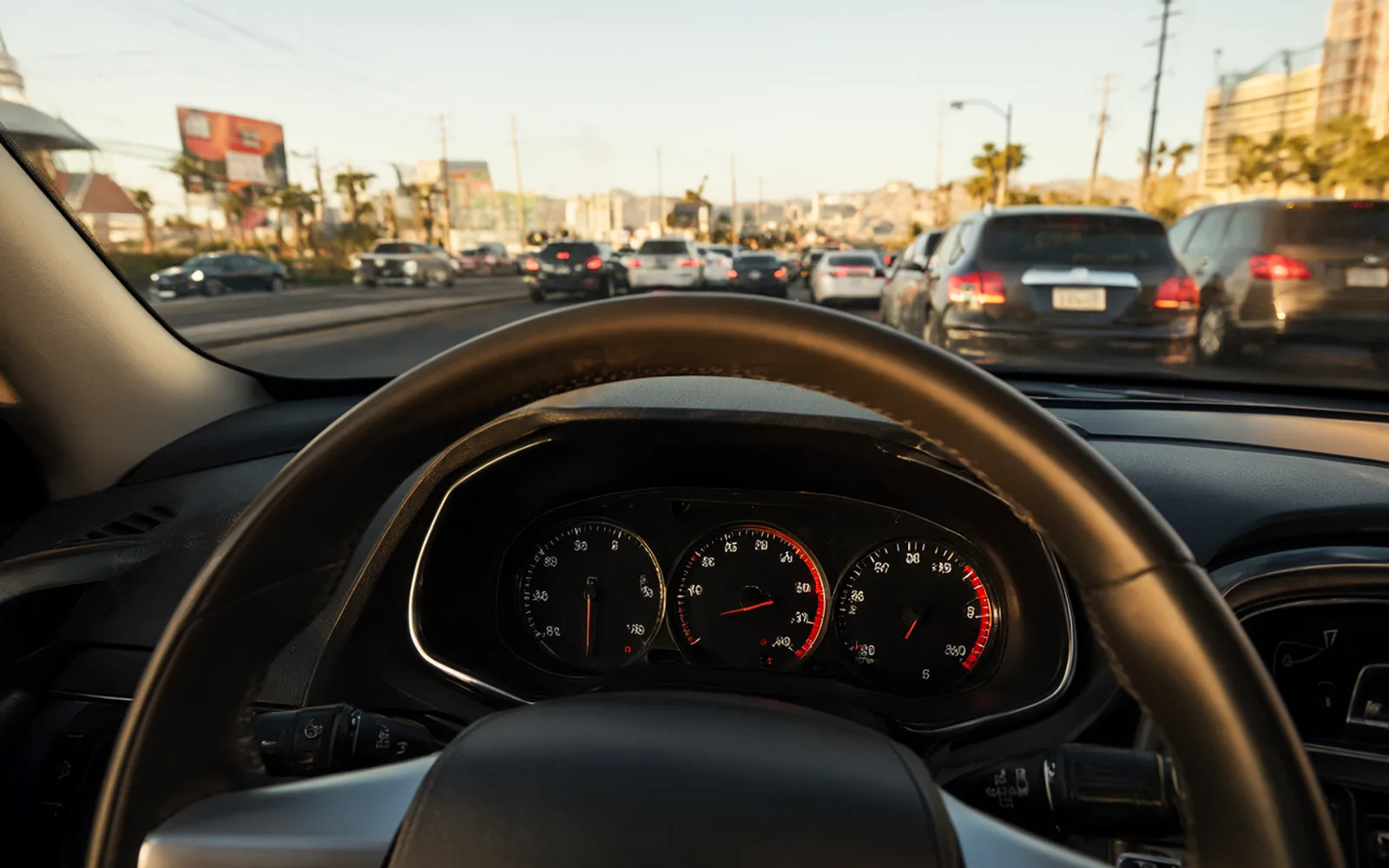
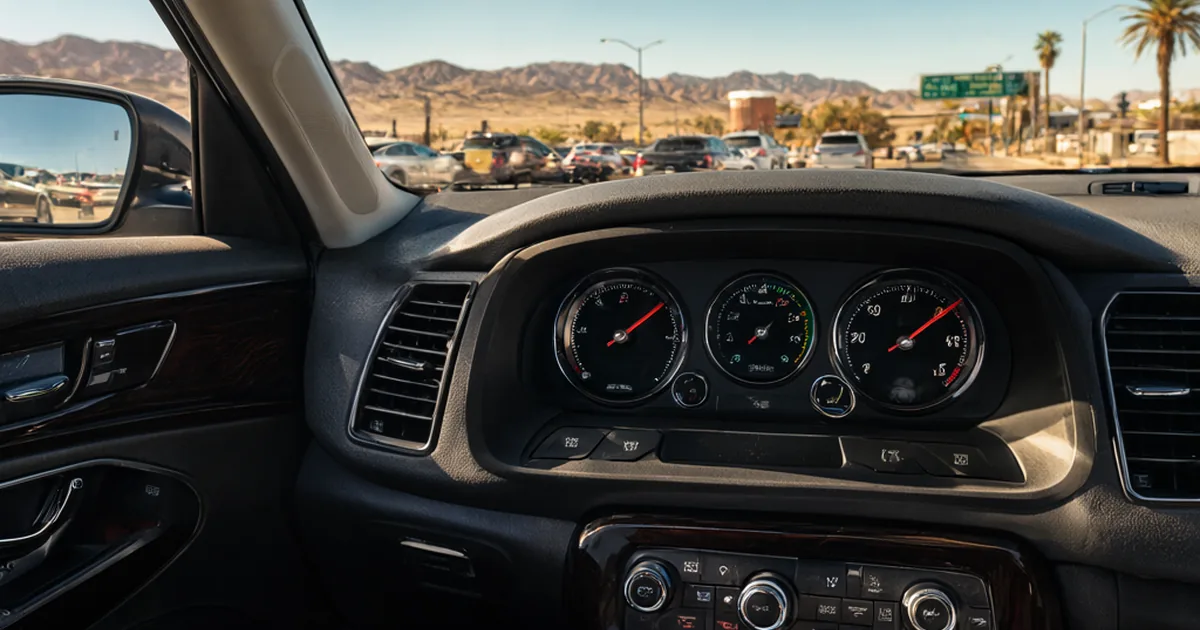
It’s 4:30 p.m. on a Tuesday in August. You’re sitting in stop-and-go traffic on the I-15 near Tropicana, the pavement is radiating heat you can actually feel through the floormat, and your temperature gauge is creeping — slowly, then suddenly — toward the red. This is not a drill. What you do in the next two minutes determines whether you drive home tonight or wait for a flatbed.
Why Vegas Stop-and-Go Is So Hard on Cooling Systems
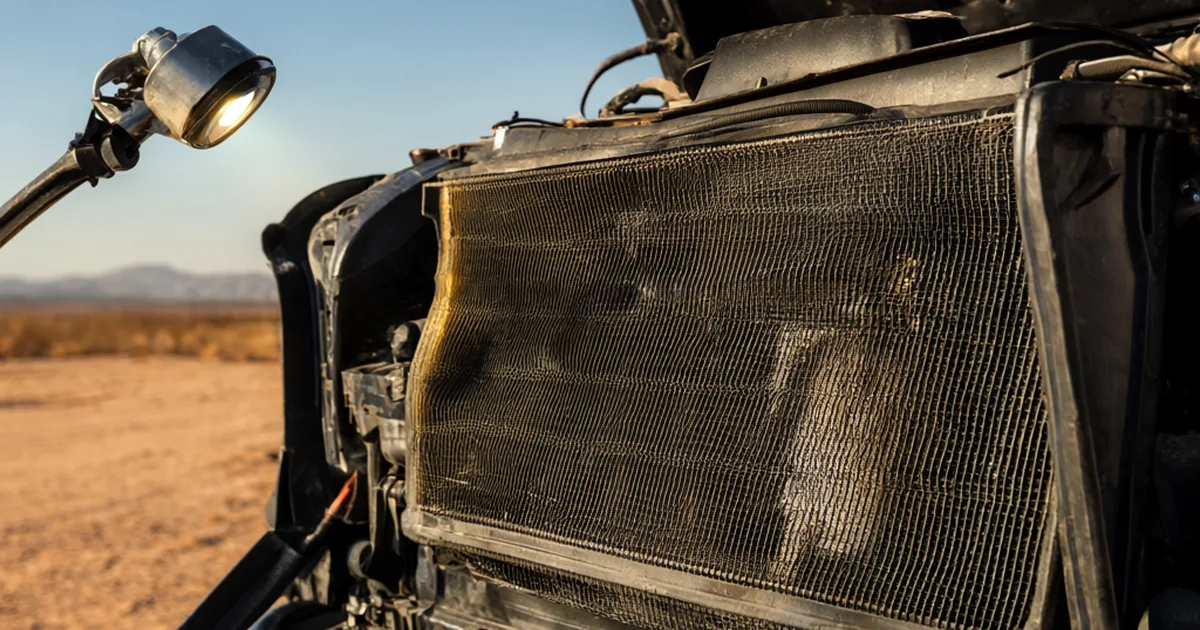
At highway speed, ram air pushes through your grille and does a lot of the radiator’s work for free. The moment you’re stuck in traffic, that free cooling disappears. Your engine fans, water pump, and coolant have to carry the entire load — and they’re doing it in ambient temperatures that regularly hit 110–115°F across the valley, from Summerlin to Henderson to the 215 Beltway corridor.
A cooling system with even one weak component that seems “fine” in March will expose itself fast in July. Here are the four most common culprits we see at our Arville Street shop every summer.
1. Stuck-Closed Thermostat
The thermostat is a spring-loaded valve that opens once coolant reaches operating temperature, letting it circulate through the radiator. When the thermostat sticks closed, hot coolant has nowhere to go. The engine temps spike quickly — often within 10–15 minutes of sitting in traffic — and the upper radiator hose stays cold to the touch while the engine roasts.
2. Weak or Failing Water Pump
The water pump is the heart of your cooling system. Worn impeller blades (common on plastic-impeller pumps found on many European makes) can spin without moving coolant efficiently. You may not notice it in mild weather, but under a heavy thermal load, flow rate drops just enough to cause intermittent overheating.
3. Failing Fan Clutch (Rear-Wheel-Drive and Truck Platforms)
Mechanical fan clutches are viscous couplings that engage the engine-driven fan harder as temperatures rise. When the clutch wears out, the fan freewheels at low speeds and barely pulls air across the radiator at idle — exactly when you need it most. A simple test: with the engine stone cold, try to spin the fan blade by hand. More than a half-turn of free rotation usually means the clutch is slipping.
4. Low or Contaminated Coolant
The Las Vegas valley’s hard water accelerates mineral buildup in cooling passages, and the heat cycles cause coolant to degrade faster than the “5-year” sticker on the jug suggests. Low coolant level — even a quart low — reduces the system’s ability to absorb and transfer heat, especially under load.
What To Do Right Now (In the Car)
If your temp gauge is pushing toward red while you’re stuck in traffic, follow this sequence — in order:
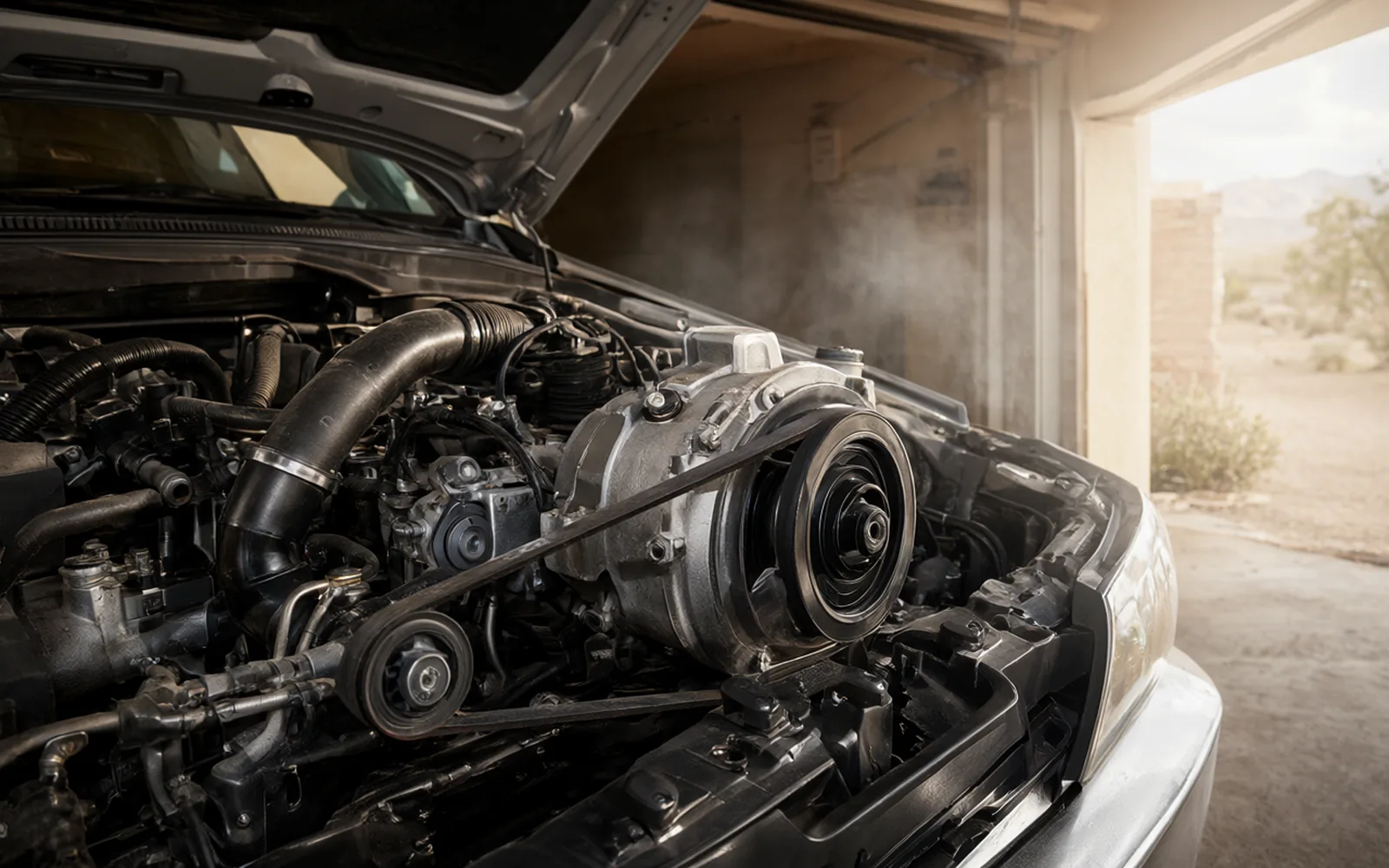
- Turn the AC off immediately. Your AC compressor adds 5–8 horsepower worth of load to the engine and increases the heat load on the radiator. Shedding it buys you time.
- Turn the heater on full blast, max fan, floor vents. Counterintuitive but effective — your heater core is a second heat exchanger. It won’t be comfortable, but it dumps heat out of the coolant loop.
- Open your windows and inch forward to get any airflow through the grille.
- If the gauge hits the red, pull over and shut the engine off. Do not keep driving. Do not open the radiator cap. Let it sit at least 30 minutes before touching anything under the hood.
- Call for a tow if coolant is visibly leaking or steam is coming from under the hood. Driving an overheated engine — even a short distance — can warp a cylinder head. That repair bill is measured in thousands, not hundreds.
Another Common Cause: The Fan Clutch
On trucks that run between job sites, a slipping fan clutch can go unnoticed for months — the first sign is often idle temperature creeping up when parked in the sun. A new fan clutch and a fresh coolant flush solve it before the monsoon season makes things worse.
Cooling System Service at BiTurbo
| Service | What We Check | Starting Price |
|---|---|---|
| Engine Diagnostics | Codes, live temp data, thermostat function | $49.99+ |
| Cooling System Inspection | Pressure test, hoses, pump, coolant condition | Included w/ diag |
| Coolant Flush & Fill | Full drain, flush, correct OEM-spec coolant | Ask for quote |
| A/C & Heating | System performance, compressor load, cabin temp | $77.77+ |
FAQ
Can I just add water to get home if I’m low on coolant? In a true emergency, yes — distilled water is better than nothing and won’t cause immediate damage. Tap water in Las Vegas is hard, so avoid it if you can. Get the system properly filled with the correct coolant mix as soon as possible; running on plain water long-term promotes corrosion and lowers the boiling point of your coolant.
How do I know if my thermostat is the problem versus the water pump? A stuck thermostat typically causes rapid, consistent overheating with a cold upper radiator hose. A failing water pump often shows up as gradual overheating under load, sometimes with a coolant smell or a small weep from the pump shaft seal. A proper diagnosis with live data from a scan tool — plus a physical inspection — is the only way to be certain. We charge $49.99+ for engine diagnostics and can usually pinpoint the source the same day.
When should I flush my coolant in a hot climate like Las Vegas? Most manufacturers say every 30,000–50,000 miles or 5 years, but the extreme heat cycling here accelerates degradation. If your coolant is brown, smells burnt, or you can’t remember the last time it was changed, treat that as overdue. We’ll check the condition any time you bring the vehicle in.
Bottom Line
A climbing temp gauge in Vegas traffic isn’t bad luck — it’s a cooling system telling you it’s been running near its limit for a while. The good news is that thermostats, water pumps, and fan clutches are relatively straightforward repairs when caught before they cause collateral damage. The bad news is that ignoring the warning can turn a $300 fix into a $3,000 one.
Schedule online at /contact or call (725) 322-7768 — our shop at 4350 Arville Street is open and ready to pressure-test, diagnose, and repair your cooling system before the next heat wave hits. See our full list of cooling and engine services to know what to expect when you come in.