Most Las Vegas drivers can tell you when their last oil change was. Almost none can tell you when anyone last looked at the fluid in the differential or the transfer case. There is no dashboard light for it, it is not on the oil-change sticker, and the parts sit out of sight underneath the car. Yet that gear oil is the only thing standing between some very expensive, very precisely machined gears and the heat and friction they generate every time you drive.
If your vehicle is all-wheel drive, four-wheel drive, or even a rear-wheel-drive car with a rear differential, this is a service worth understanding before something starts whining under the floor.
What the differential and transfer case actually do
The differential lets the left and right wheels turn at different speeds. That happens every time you take a corner: the outside wheel travels farther than the inside one. Inside the housing, a set of hypoid gears and bearings runs in a bath of heavy gear oil. Rear-wheel-drive cars have one at the back, front-wheel-drive cars build it into the transaxle, and AWD and 4x4 vehicles usually have a front and a rear unit.
The transfer case is found on 4x4 trucks, SUVs, and many AWD cars. It takes power from the transmission and splits it between the front and rear axles. Depending on the design it uses a chain or gears, and some units include clutch packs or electronically controlled couplings that decide how much torque goes where.
Both components share the same weakness: the fluid is a small volume working very hard, and it is sealed in a housing you never open unless you service it.
Why this fluid wears out
Gear oil does three jobs: it lubricates, it carries heat away, and it protects metal surfaces under extreme pressure. Over time:
- Heat breaks the oil down. Summer pavement in Las Vegas pushes drivetrain temperatures well beyond what a cool climate would. Hot oil oxidizes and thins out, which reduces the protective film between gear teeth.
- Additives are used up. The extreme-pressure additives that protect hypoid gears deplete with use.
- Wear metal accumulates. Tiny particles from normal gear and bearing wear circulate in the oil, and on many units the drain plug is magnetic specifically to catch them. A little fine paste is normal; chunks or glitter are not.
- Seals age. Dry desert air and heat harden axle and pinion seals. A seal that weeps slowly lets the level drop without any obvious puddle.
Towing, hauling, off-road trips toward Mt. Charleston, and stop-and-go driving on the 215 all add load. Those are the conditions manufacturers describe as “severe service,” and they usually call for shorter intervals.
Warning signs to take seriously
| Symptom | Likely cause | How urgent |
|---|---|---|
| Whine or howl that changes with speed, not with engine rpm | Worn gears or bearings, low or degraded gear oil | High: inspect soon |
| Clunk, shudder, or binding in tight low-speed turns (parking lots) | Wrong or degraded fluid in a limited-slip or AWD coupling | High: stop driving it hard |
| Gear oil smell or oily film on the underside near an axle or transfer case | Leaking seal or breather | Moderate: check level promptly |
| Vibration or hum under load that fades when coasting | Bearing wear, low fluid level | High |
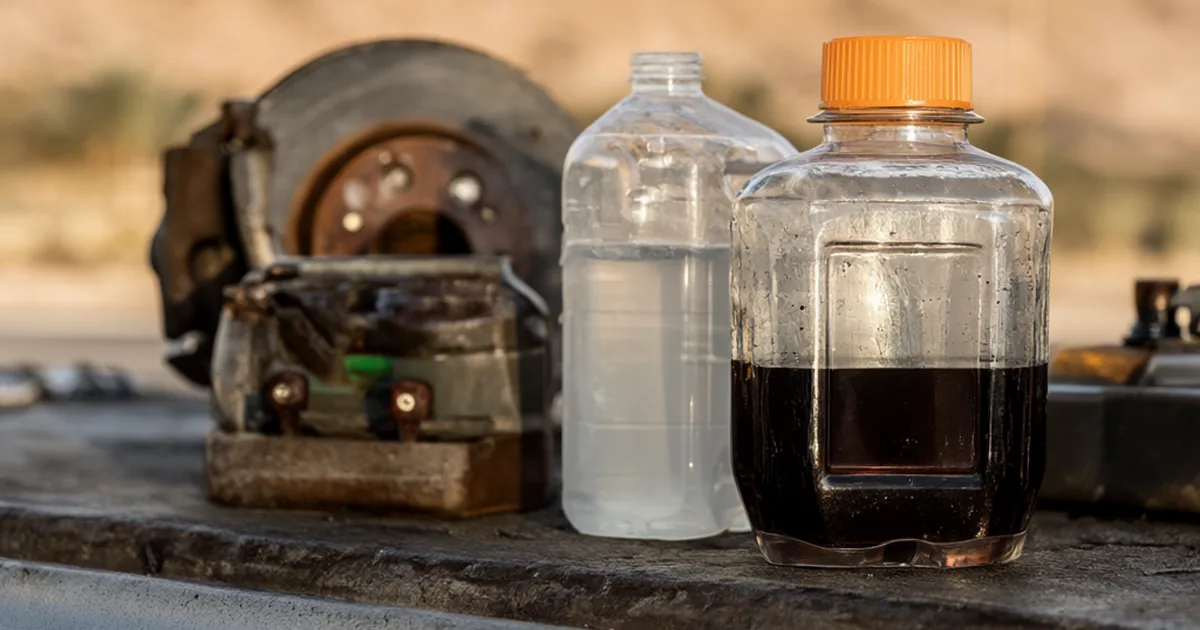
| Dark, burnt-smelling fluid with metal particles on drain plug | Overheated oil and advanced wear | High: service and inspect |
Several of these overlap with tire, wheel bearing, and driveshaft problems, which is why a proper inspection matters more than guessing from sound alone.
How often should it be serviced?
There is no single number, and anyone who quotes one for every vehicle is guessing. Intervals vary widely by manufacturer, model, and how the vehicle is used. Some makers list the fluid as “lifetime,” but “lifetime” usually means the life of the warranty or an assumed ownership period, not the life of the gears. Some owner’s manuals call for service somewhere in the tens of thousands of miles; others only list it under severe-service schedules.
A sensible approach for Las Vegas driving:
- Check what your owner’s manual or service schedule says for normal and severe service.
- If you tow, carry heavy loads, or drive off-road, use the shorter schedule.
- If you bought the vehicle used and have no record of the last service, treat it as unknown and have the fluid inspected.
Using the right fluid matters
This is not a place for a universal bottle off the shelf. Differentials and transfer cases are specified for particular gear-oil grades, and some need a specific friction modifier for limited-slip units. Many transfer cases call for automatic transmission fluid or a manufacturer-specific fluid rather than conventional gear oil. Many European AWD systems, including those with electronically controlled clutch couplings, require the exact manufacturer-approved fluid and fill procedure. The wrong fluid can cause chatter, binding, or premature clutch wear.
That is one reason we work from the vehicle’s specification rather than a generic recommendation, especially on the European makes we service every day.
What a proper service involves
A real drivetrain fluid service is more than draining and refilling:
- Inspect the housings, seals, and breathers for leaks.
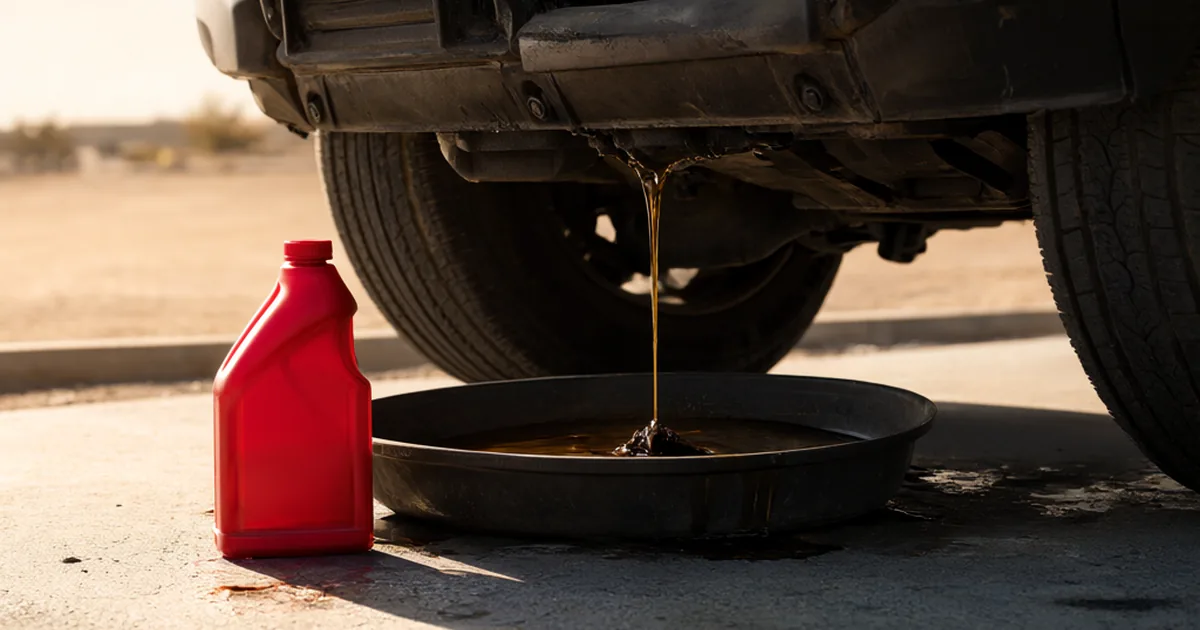
- Drain the old fluid and examine it for color, smell, and metal content.
- Check the magnetic drain plug for debris.
- Refill with the specified fluid to the correct level using the correct procedure.
- Road-test to confirm the noise or binding is gone.
What we find in the old fluid often tells us more than the symptoms did. When a drivetrain noise or shudder is already present, it is worth pairing the service with a diagnostic inspection so we know whether fluid is the whole story or a bearing or gear is already damaged. We quote in writing after inspection, so there are no surprises.
FAQ
Q: Is differential fluid the same as transmission fluid? A: No. The differential uses its own gear oil, usually a heavy-grade oil, and sits in a separate housing from the transmission. The transfer case is also separate and may use a different fluid again. Each has its own specification.
Q: Can I just top it off if the level is low? A: Low fluid means it went somewhere. Topping off hides a leaking seal and does nothing about oil that is already worn out. Find the leak and service the fluid.
Q: My car is front-wheel drive. Does this apply to me? A: The differential is built into the transaxle, so it is usually serviced as part of transmission fluid service. Ask us about your vehicle’s schedule. Our transmission service covers what your make requires.
Bottom line
Differential and transfer case fluid is cheap insurance for parts that are very expensive to replace. Heat, towing, and age all work against it, and the symptoms often appear only after damage has started. If your drivetrain is making noise, if you have no service record, or if it has simply been years, have it inspected before the whine becomes a repair.
Schedule online at /contact or call (725) 322-7768 — and see our services page for everything we handle at our Arville Street shop.