A common story: a driver gets the wheels rebalanced again and again at tire shops, and the vibration at 60 mph comes back within a week. Often the real cause is a bulge in a tire sidewall (a separated belt inside the tire that no balance machine can ever correct), or a worn driveshaft U-joint throwing a separate vibration above 55 mph. “Balance the wheels” is the easy answer, and it misses these. Here’s the actual diagnostic tree we use.
Step One: When Does It Actually Shake?
Before we touch anything, we ask four questions, and the answers narrow the cause by 80%:
| When does it shake? | Likely cause |
|---|---|
| Only at one specific speed (55-60 mph), goes away above 70 | Tire balance or out-of-round tire |
| Gets worse with speed, never goes away | Driveshaft, U-joint, or separated tire belt |
| Only under acceleration | CV joint, motor/trans mount, misfire |
| Only when braking (steering wheel) | Warped front rotors |
| Only when braking (whole car / pedal) | Warped rear rotors |
| Felt through floor only | Driveshaft, exhaust hanger, rear diff |
| Felt through steering wheel only | Front tires, wheels, or front suspension |
| Random / pothole-triggered | Loose suspension component |
This isn’t perfect, but if a shop doesn’t ask these questions, they’re guessing.
Tire-Related Causes (~60% of cases)
The most common, and the easiest to misdiagnose:
- Static imbalance: missing wheel weight, usually after a pothole. Fixed with standard spin balance. $20-40 per wheel.
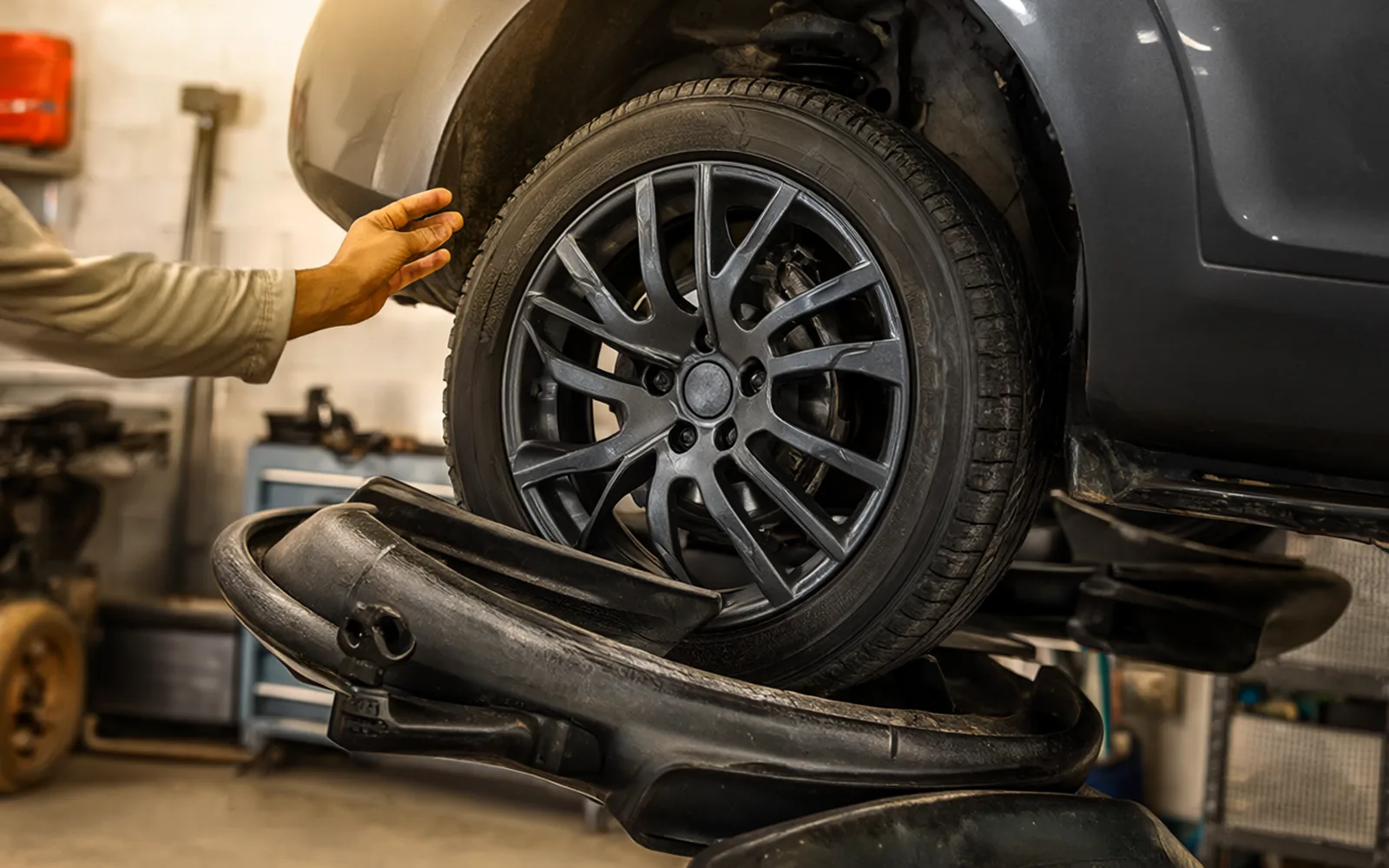
- Out-of-round tire: tire is not perfectly circular. Spin balance won’t fix this — needs road-force balancing (machine applies a load roller to simulate vehicle weight, measures runout).
- Separated belt: internal steel belt has come apart. Visible as a bulge, lump, or wave in the sidewall or tread. Tire must be replaced. Vegas heat (110°F+ asphalt) accelerates rubber breakdown — tires older than 6 years are at risk even with tread left.
- Bent rim: pothole damage. Sometimes repairable, often replacement.
- Uneven tread wear: cupping, feathering — usually points to alignment or suspension wear, not just the tire.
Spin balancer vs road-force balancer: a spin balancer assumes the tire is round. A road-force balancer measures whether it actually is. If your car shakes after balancing, it needs road-force.
Suspension Causes
A car can roll smooth on Tropicana flat and then vibrate violently on I-15 expansion joints because suspension issues only show up under specific load conditions:
- Bent control arm: usually after curb impact. Visible on a lift.
- Worn ball joints: shake plus a clunk over bumps. Dangerous if neglected — ball joint failure separates the wheel from the car.
- Dead struts/shocks: bounce test. Push down on the corner, release. More than 1-2 bounces = blown damper.
- Worn tie-rod ends: causes wandering at speed plus uneven tire wear.
- Bad wheel bearing: humming that changes with steering input, possible vibration as bearing fails completely.
See our /services/suspension-repair-las-vegas/ page for what we inspect.
Drivetrain Causes
These often get blamed on tires because the timing overlaps:
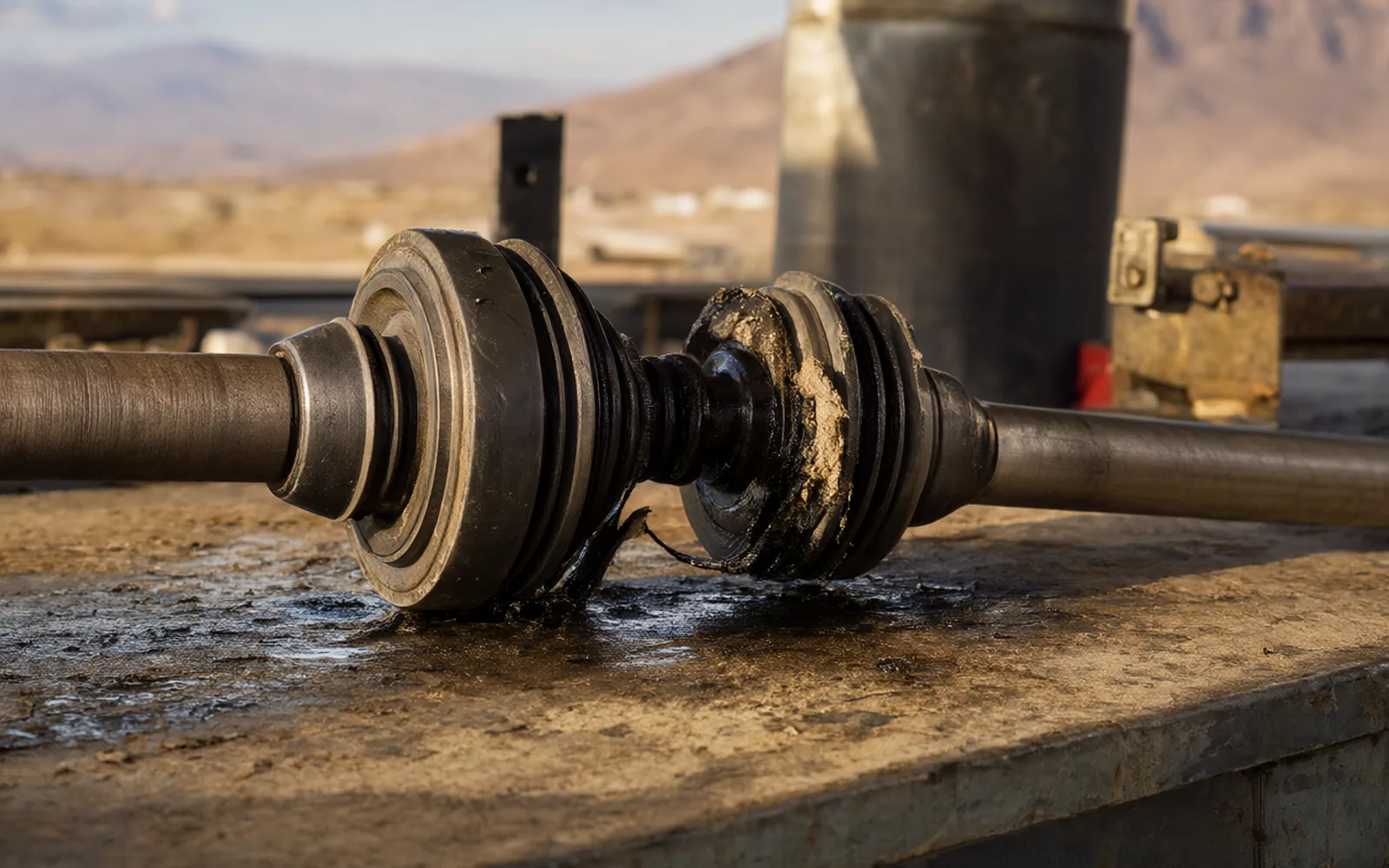
- CV joint (axle): most common on FWD and AWD cars. Shakes/clicks under acceleration, smoother when coasting. Torn boot lets grease out and dirt in — once contaminated, it’s done.
- Driveshaft U-joint: RWD and 4WD trucks. Constant vibration above 45 mph, sometimes a clunk on shifts. The Tahoe above had this.
- Transfer case bearing (AWD/4WD): hum that builds with speed, sometimes a vibration.
- Carrier bearing (long driveshafts): rubber-mounted bearing in the middle of the shaft. Wears out around 100K miles.
Engine-Related Vibration
A cylinder misfire produces a vibration that mimics a tire problem because both occur at engine-speed harmonics. We scan the engine ECU first thing on any vibration complaint:
- P0301-P0308 codes = cylinder-specific misfire (number 1-8)
- Freeze-frame data tells us the RPM and load when the misfire happened
- Long-term fuel trim above +15% suggests vacuum leak
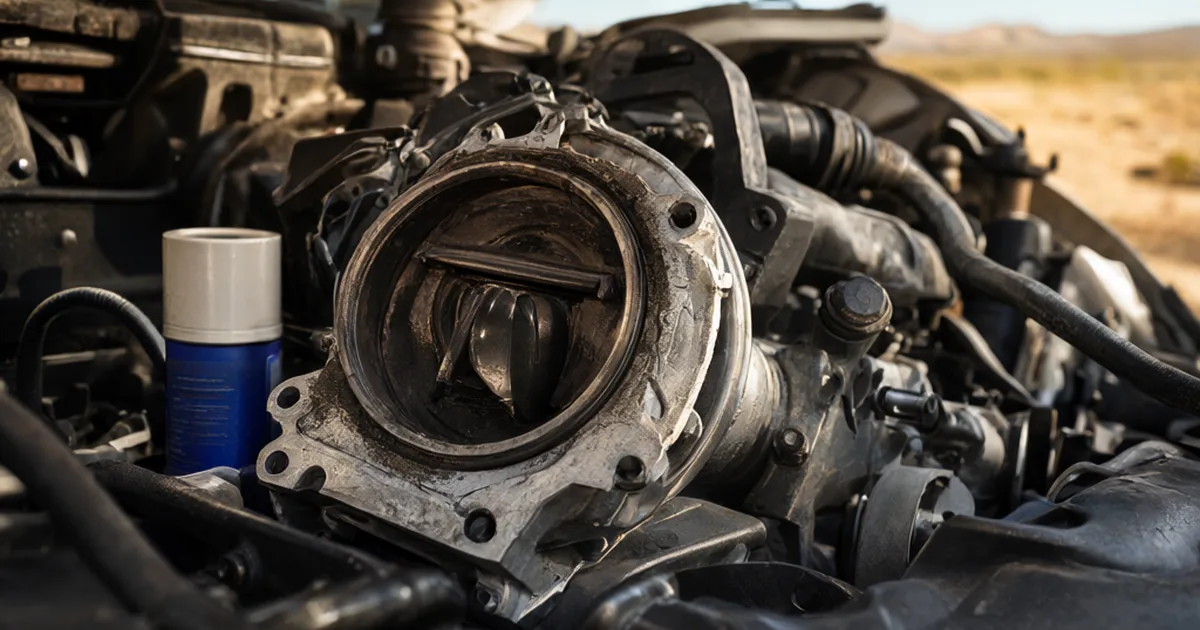
On a 4-cylinder turbo (BMW B48, Audi 2.0 TFSI, Mercedes M270), a vacuum leak above 60 mph (high engine vacuum at cruise) can cause a fine vibration that disappears at idle or under heavy throttle. This is why a proper diagnostic scan is part of any vibration workup, even when the check engine light isn’t on — pending codes don’t trigger the light.
Brake-Related Vibration
If the shake only happens when you brake, it’s brakes, not tires:
- Steering wheel oscillation under braking = warped front rotors
- Pedal pulsation + whole-car shudder = warped rear rotors
- Brake-pull plus vibration = stuck caliper or collapsed brake hose
Our brake guide covers the full inspection.
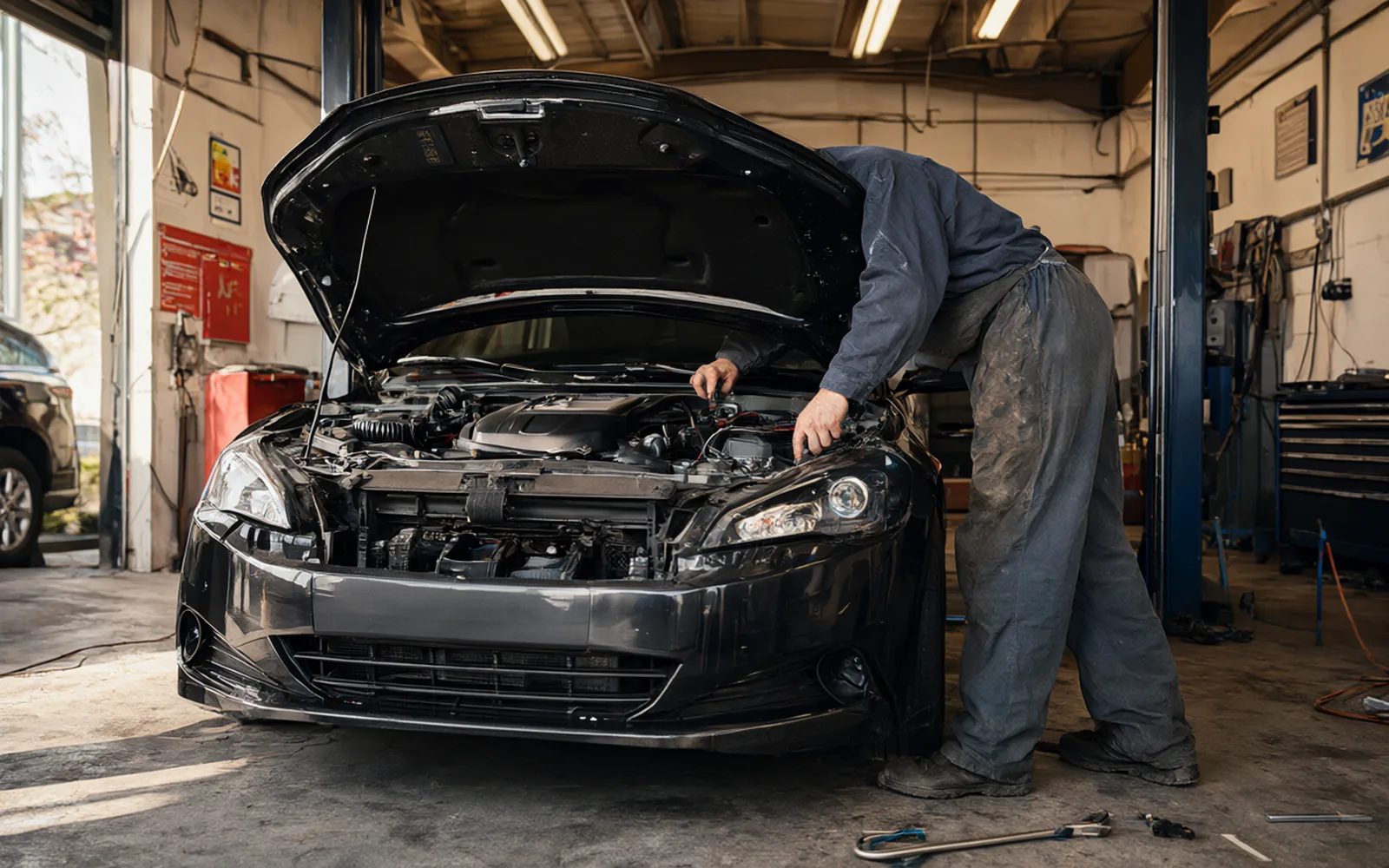
How We Actually Diagnose at BiTurbo
The $49.99 engine diagnostic fee covers a full workup, not just an OBD reader:
- Road test with the customer — confirm the exact speed, conditions, and what they feel
- Lift inspection — visual check of tires (sidewall, tread, age code), CV boots, U-joints, suspension components
- Wheel bearing test — hand-spin each wheel, listen for grinding
- Road-force balance check if tires are suspected
- Scan all modules — engine, trans, ABS — freeze-frame on any pending codes
- Stress test — sometimes a second road test with a tech in the passenger seat watching live data
Most vibration complaints are solved within 90 minutes of diagnostic time.
Mini FAQ
Q: My car was balanced and still shakes. What’s next? Road-force balance, then a lift inspection. Spin balance assumes the tire is round.
Q: Can a check engine light cause vibration? The light itself doesn’t, but a misfire (which triggers the light) absolutely can.
Q: Why does it only shake on the freeway? Most rotational components (tires, driveshafts) only show vibration above a critical speed — usually 50-65 mph.
Q: How much to fix? Tire replacement starts around $200/tire. CV axle is $250-450 installed. Driveshaft U-joint is $200-350. Diagnosis itself is $49.99 and applies toward the repair.
Don’t pay for three balancings. Bring the car in once and let us actually find what’s wrong. Call (725) 322-7768 or book online. Shop is at 4350 Arville Street, Suite 490 — open Mon-Sat 9AM-6PM.