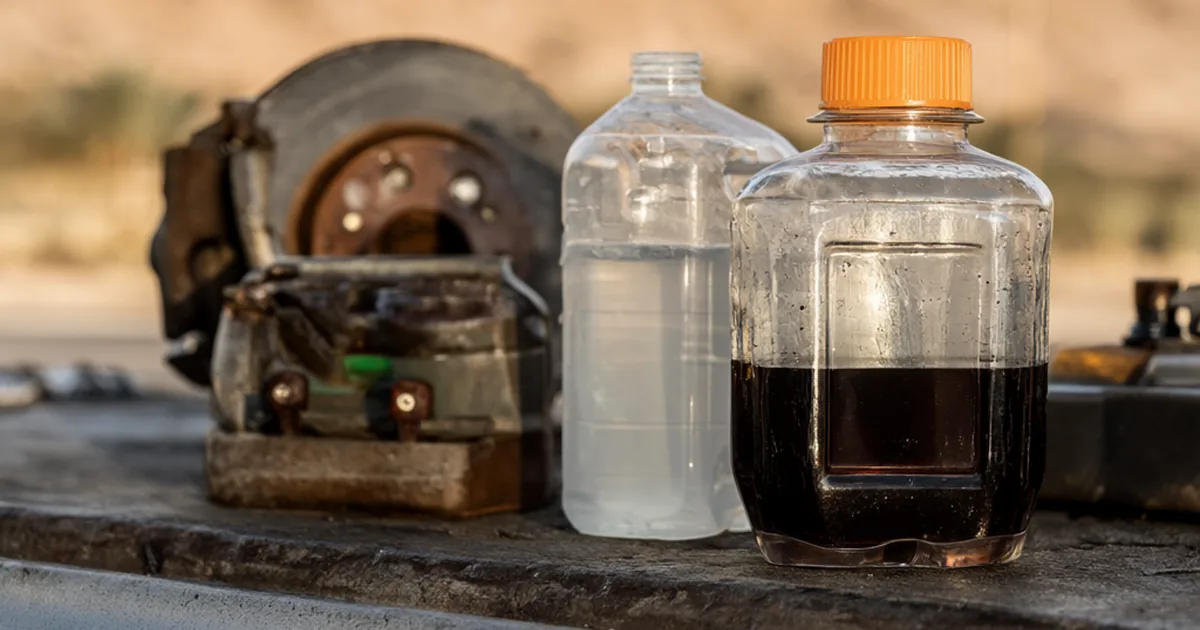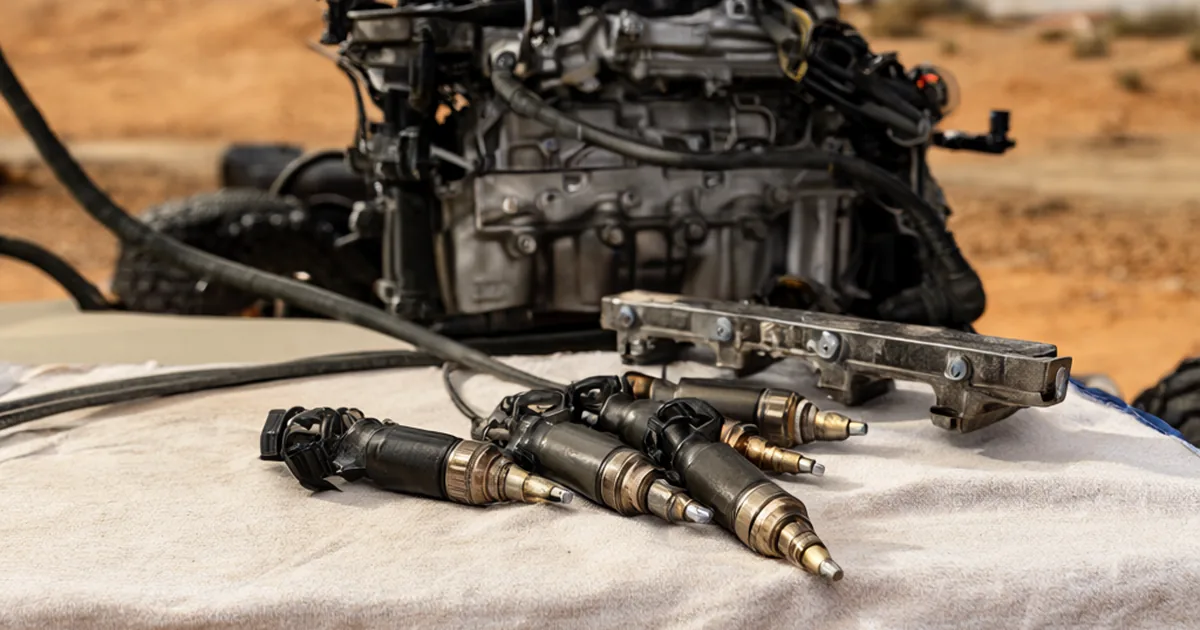
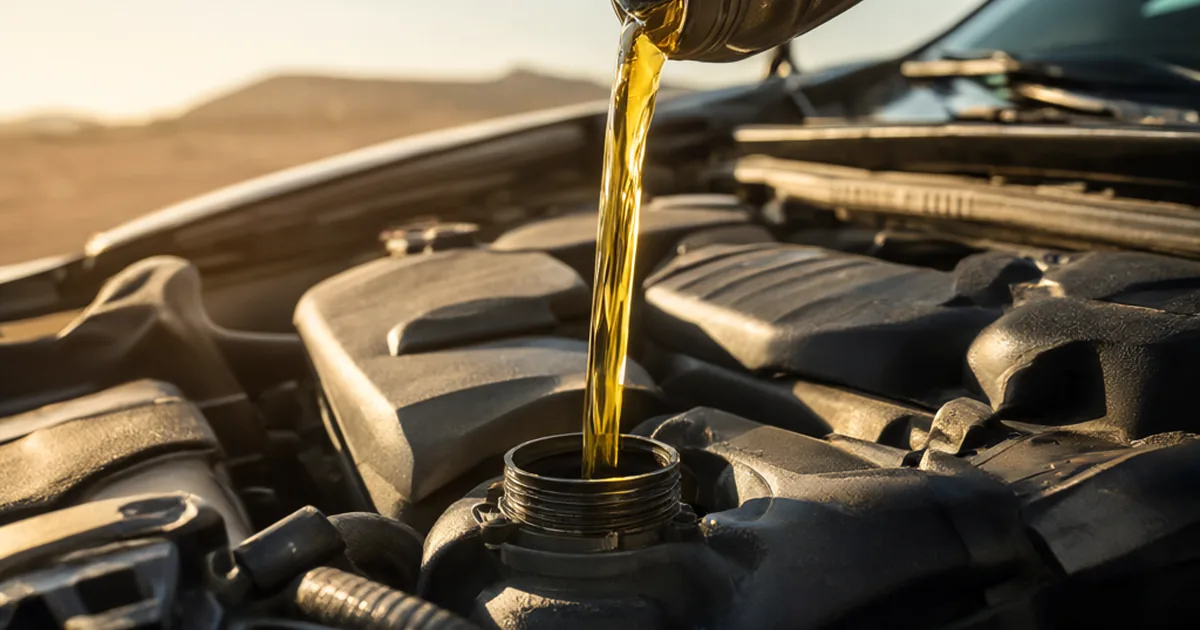
There’s a rule in chemistry called the Arrhenius equation. The short version: reaction rate roughly doubles for every 10°C (18°F) increase in temperature. Apply that to motor oil — which oxidizes, breaks down, and depletes its additive package — and the implications for Las Vegas drivers are stark.
A car commuting in 70°F Seattle weather sees an oil sump temperature around 200°F at steady cruise. The same car driving I-15 north of Sahara in August, with ambient at 112°F, sees sump temps north of 240°F. That’s a 22°C delta. By Arrhenius, the oil is oxidizing roughly 4-8 times faster than the textbook scenario the manufacturer wrote their service interval around.
That’s why we don’t trust the OEM “long-life” interval in Vegas. We’ve cut open too many oil filters at 8,500 miles to believe it.
Oil Grades and Vegas Tolerance
Three broad categories, three very different behaviors at 240°F:
Conventional mineral oil: base oil shears down, viscosity drops, additives deplete first. In Vegas summer driving, you can measure viscosity loss at 3,500 miles. Still sold mainly for older domestic engines.
Synthetic blend: typically 20-30% synthetic base, 70-80% conventional. Better than straight conventional, but oxidation resistance is mediocre. Our standard service tier — $49.99+ — uses a quality blend for daily drivers that aren’t running BMW LL-01 spec or similar.
Full synthetic: Group IV (PAO) or Group V (ester) base oils. Oxidation rate at high temperature is a fraction of conventional. This is the only oil we put in BMW, Mercedes, Audi, Porsche, and any turbocharged engine.
The other half of the story is the additive package. Detergents, dispersants, anti-wear (ZDDP), anti-oxidants, viscosity modifiers — these deplete over time. We measure additive health by TBN (Total Base Number). A fresh quality oil starts at TBN 8-12. When TBN drops below 2, the oil stops neutralizing acidic combustion byproducts and engine wear accelerates fast.
Real-World Vegas Intervals
We’ve built our recommendations from a decade of cut-open filters and sampled oil:
| Oil Type | OEM Stated Interval | Vegas Reality |
|---|---|---|
| Conventional | 5,000 mi | 3,000-3,500 mi |
| Synthetic blend | 7,500 mi | 5,000 mi |
| Full synthetic (standard) | 10,000 mi | 7,500 mi |
| Full synthetic (BMW LL-01, MB 229.51) | 15,000 mi | 8,000-10,000 mi |
| Severe service (towing, canyon driving) | Varies | Cut all above by 25-30% |
If you do regular Mt. Charleston runs, Lake Mead Drive loops, or pull a boat to Lake Havasu, treat your driving as severe service regardless of what your manual says. Hill climbs at 110°F ambient with the A/C maxed and a load behind you are not “normal driving.”
When the OEM Long-Life Rule Lies
BMW’s 15,000-mile oil change interval was developed and validated in Munich and the Frankfurt test loop — not Henderson in July. We routinely see BMW long-life oils that look like dark coffee grounds and smell burnt by 8,000 miles in Vegas service. The base oil is still flowing, but the additive package is shot.
Mercedes’ Flexible Service System (ASSYST Plus) uses oil quality sensors that estimate degradation. They work — but they were calibrated against European climate norms. We’ve seen ASSYST report “20% oil life remaining” on a 2018 E-Class where the oil was, by lab analysis, essentially exhausted.
Bottom line: trust the lab, not the dashboard. If you want certainty, oil analysis from a service like Blackstone Labs costs about $25-30 and tells you exactly where your oil is.
How to Tell Your Oil Is Past Due
Without a lab test, these are reliable field signs:
- Smell on the dipstick: clean oil smells faintly of new engine; degraded oil smells burnt, sharp, sometimes like wet asphalt
- Color past brown into deep black: color alone isn’t conclusive (diesels go black immediately, modern detergent gasoline oils hold cleaner color), but combined with smell and feel, it’s a flag
- Texture: rub a drop between thumb and finger. Healthy oil feels slick. Spent oil feels gritty or slightly tacky
- Magnetic plug debris: a clean magnetic drain plug should have light fuzz at most. Visible chunks = engine wear, sooner is better
- Consumption increase: burning oil between changes accelerates as the oil ages
Why We Hand-Tighten Filters and Match OEM Viscosity
A few things that separate a real oil change from a quick-lube assembly line:
- Filter torque to spec, not “grunt-tight.” Overtorqued filters distort the seal and leak; undertorqued ones loosen and leak worse. Most modern engines spec 14-18 N·m on the housing
- OEM viscosity match. “5W-30” is not a substitute for “BMW LL-01 0W-20” or “MB 229.5 5W-40”. Manufacturers spec viscosity grades for cold start protection AND high-temperature shear stability. Mismatched oil voids long-life claims and accelerates wear
- Crush washer or O-ring replaced every time. Reusing one is asking for a drip
- Right oil capacity. Overfill on a Mercedes M276 = aerated oil, foamy operation, oil control issues. Underfill = high temps. Capacity matters
- Service interval reset on the right tool. ISTA for BMW, XENTRY for Mercedes, VAS for Audi/VW — not a generic OBD scanner that the next dealer visit will flag as “non-OEM service”
See our full oil change service for current pricing — $49.99+ for synthetic blend, more for full synthetic and exotic specs.
FAQ
Can I extend my interval with additives? No. Additive bottles marketed at parts stores can shift one test parameter (say, viscosity) but they don’t reset the depleted detergent and anti-oxidant chemistry that matters most. Save the $15 for the next change.
Is my dealer’s interval valid? It’s the longest interval the manufacturer believes won’t trigger warranty claims — not the optimal interval for engine longevity. For a leased car you’ll turn in at 36 months, fine. For a car you want at 200,000 miles, change earlier.
How long does an oil change take? 30-45 minutes for a standard car. European cars with belly pans, top-mount filters, and CBS resets run 60-75 minutes. We don’t rush it. See scheduled maintenance for full-service packages.
Don’t Let Vegas Heat Eat Your Engine
The right oil at the right interval is the single cheapest insurance policy you’ll ever buy. We use OEM-spec lubricants, torque filters to spec, log every service to your CARFAX record, and reset service intervals on the correct factory tool.
Call (725) 322-7768 or book an oil change online. We’re at 4350 Arville Street, Suite 490, open Mon-Sat 9AM-6PM. European or domestic, we change it right.