TPMS Light On Cold Mornings? The Temperature-Pressure Connection
It’s 5 a.m. in Las Vegas, and your TPMS light is on. You’re not driving yet, but the dashboard is already giving you a heads-up. This isn’t just a random glitch — it’s a direct result of how tire pressure changes with temperature. In our desert climate, where mornings can dip into the 50s or even the 40s, this is a common issue that many drivers overlook.
Tire pressure is directly affected by temperature. For every 10°F drop in temperature, tire pressure decreases by roughly 1 psi. That means on a cold morning, your tires are losing pressure — and your TPMS (Tire Pressure Monitoring System) is reacting to it. This is especially true in Las Vegas, where summer temperatures can soar above 110°F, but winter mornings can be just as impactful due to the dramatic temperature swings.
Why Cold Mornings Trigger the TPMS Light
Understanding how tire pressure works is key to interpreting your TPMS light correctly. Tires are filled with compressed air, and as the temperature drops, the air inside contracts, leading to a drop in pressure. This is a natural occurrence, not an indication of a flat tire or leak. However, it can be confusing if you’re used to warmer climates where tire pressure remains relatively stable.
In Las Vegas, where the heat is extreme during the day and chilly at night, this temperature fluctuation becomes even more pronounced. For example, if your tires were inflated properly at 80°F in the middle of the day, by morning they might be down to 60°F, causing a pressure drop that triggers the TPMS light. This is why many drivers in our area find themselves checking their tires at odd hours — and sometimes wondering if there’s a problem when there isn’t.
How to Reset the TPMS Light After a Cold Morning
Resetting your TPMS light after a cold morning is straightforward, but it depends on your vehicle’s system. Most modern cars require you to manually reset the TPMS after adjusting tire pressure. Here’s how it works:
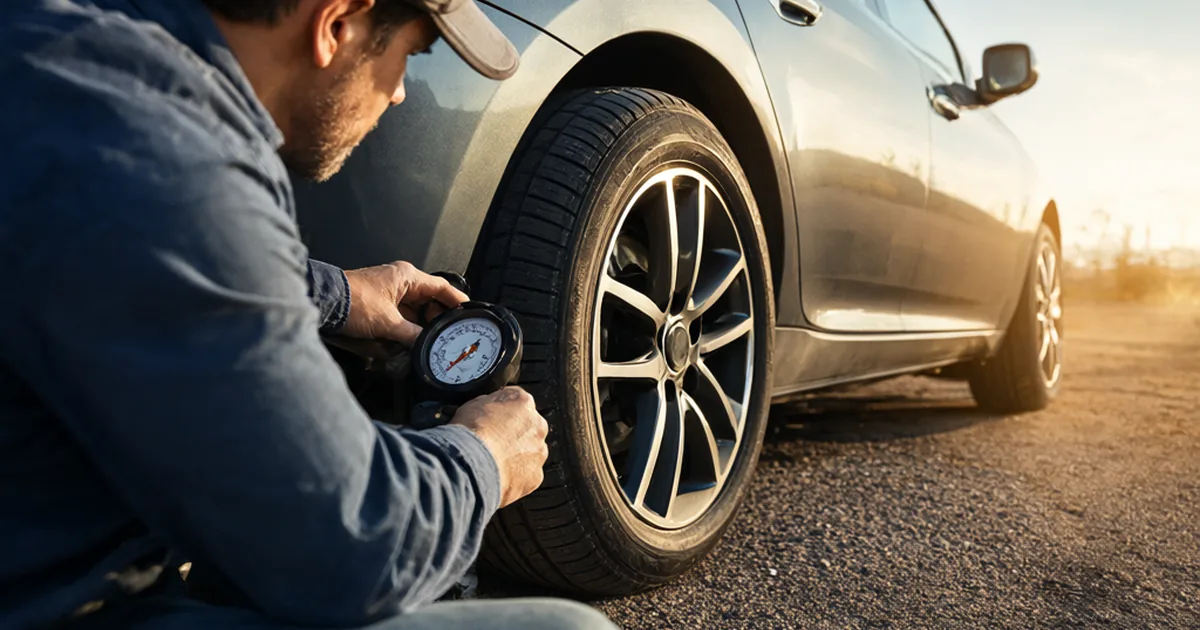
- Check Tire Pressure: Use a reliable tire pressure gauge to check each tire’s pressure. Make sure it matches the recommended PSI listed in your owner’s manual.
- Inflate or Deflate as Needed: If the pressure is too low, inflate the tires to the correct level. If it’s too high, deflate slightly.
- Reset the TPMS Light: Turn the ignition to the “on” position without starting the engine. Press and hold the TPMS reset button (usually located under the steering wheel) until the light blinks or turns off.
If you’re unsure where the reset button is, our team at BiTurbo Auto Repair can guide you through the process. We also offer free TPMS system checks to ensure your vehicle’s sensors are functioning correctly.
Common Symptoms vs. Likely Causes vs. Urgency
| Symptom | Likely Cause | How Urgent |
|---|---|---|
| TPMS light on in the morning | Cold temperatures causing pressure drop | Low |
| TPMS light stays on all day | Leak or damaged tire | Medium |
| Irregular tire wear or vibration | Underinflated tires over time | High |
If your TPMS light only comes on in the cold and goes off by midday, it’s likely just a temperature change. However, if the light remains on throughout the day, it could indicate a more serious issue like a leak, damaged valve stem, or even a faulty sensor.
FAQ: TPMS Light and Cold Weather
Q: Can I ignore the TPMS light if it only comes on in the cold?
A: Yes, as long as your tires are properly inflated after warming up. However, it’s a good idea to check your pressure regularly, especially in extreme weather conditions.
Q: How often should I check my tire pressure in Las Vegas?
A: We recommend checking your tires at least once a month, and more frequently during extreme temperature changes. Cold mornings are a great time to do it.
Bottom Line
In Las Vegas, where temperatures can swing dramatically, understanding how tire pressure is affected by cold mornings is essential for safe driving. The TPMS light is there to help you, not alarm you — but it’s important to know when to act and when to rest assured.
Schedule online at /contact or call (725) 322-7768 — our team at BiTurbo Auto Repair is here to help you maintain your vehicle’s performance, no matter the weather. For more tips on tire maintenance and TPMS systems, visit our services page.